The feminist movement has existed for as long as anyone currently alive can remember. However, despite that, misogyny still exists in our workplaces, on our streets, on the internet, and even in our homes.
Riley has photographed people around the North East of England who are vocal and passionate about feminism, and encapsulated their stories of how they became the feminists they are today.
This project is based on Riley’s own experience as a woman living in the North East, and her recent observation of how misogyny is increasing by the day and how it has affected her personally in her everyday life. She hopes her work will raise awareness of positive local stories that combat misogyny.
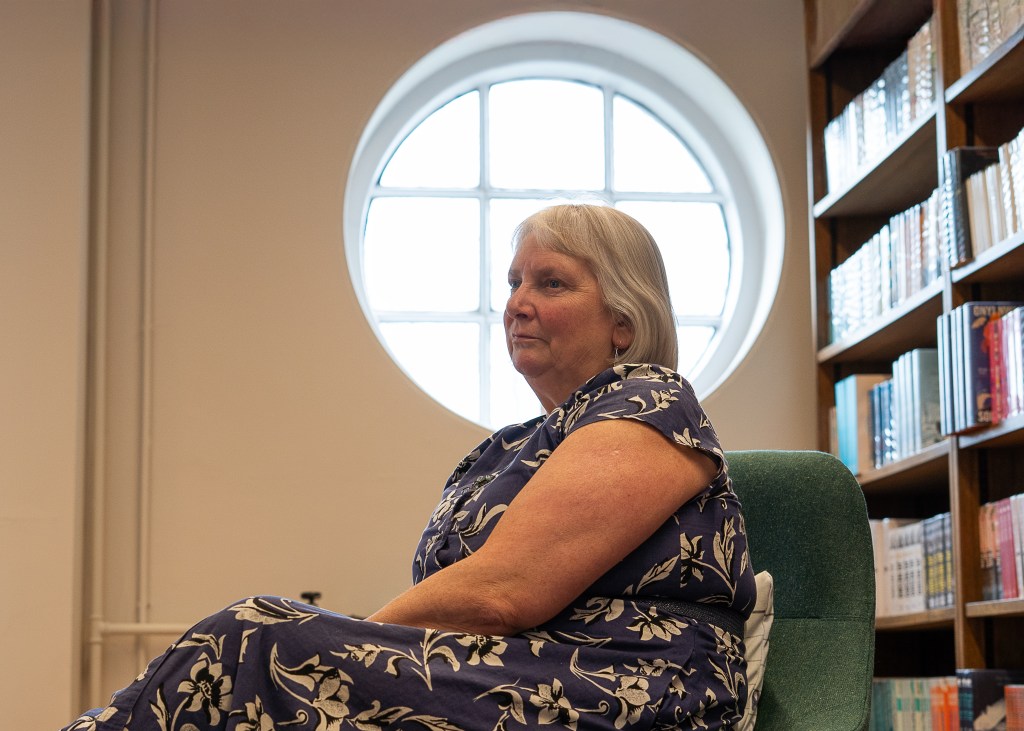
Debra
She/Her
“We live in a society that is based upon women’s oppression. Although a lot has been achieved in the last 100 years women still earn less, are expected to care for the young and elderly, and encounter sexist assumptions if not abuse daily. The impact of oppression is magnified by poverty, whether that be in the developing world or in this country.
Sexist abuse has become more prevalent in recent years. Technology has opened women to new forms abuse, including up-skirting, anonymous abuse on social media and online stalking. Attitudes to women that had improved have suddenly reversed among some sections of the population with individuals openly talking about women needing to get back to the kitchen or bedroom.
We live in scary times with the rise of masculine toxicity, attacks on the trans community and the rise of racism. These have an impact on all women. An attack on one woman is an attack on all of us.
The double speak of the far right who claim to be ‘protecting women and children’ is shorthand for trying to assert white male power. I find the scapegoating of the trans and immigrant communities very scary. Instead of standing up to this the government is making concessions to the right and making life more difficult for immigrants, the trans community and in the process everyone who faces oppression. The cuts to welfare and public services we have seen under this, and previous governments, always have greater impact on women.
The government need to call out scapegoating, improve welfare and public services and challenge discrimination. This should include ensuring that schools teach the complexity of gender and implement anti-sexist and anti-racist education. Women and girls achieve well educationally but their achievements need to translate into career opportunities and equal pay.
Women in the North of England have the highest rates of domestic violence abuse in the country. The highest rates are in the North East at 19 per 1,000 population followed by 17 in Yorkshire and the Humber then 15 in the North West. The average for the rest of England is 11.”
- Bambra C, Davies H, Munford L, Taylor-Robinson D, Pickett K et al. (2024) Woman of the North.
Tamara
She/Her
“Growing up as an undiagnosed autistic girl in the 70s, I couldn’t understand why girls and boys were treated so differently. It was so unfair. The sexism of the 70s was rife, with scantily clad women and dancers on TV programmes and Page 3 of The Sun thrust in your face from an early age.
When I was 16 my mother and I, plus 3 younger siblings had to escape my abusive stepfather to a council “safe house.” I saw how the system was rigged against her and how he could manipulate it. The police even persuaded her to drop attempted manslaughter charges to “save her children from going on the stand.”
At Manchester Polytechnic in the late 80s the Literature /Philosophy syllabus was male dominated, so much so there was one discrete module in Women’s Writing available to select in the third year. I wrote my dissertation on “Comparing 3 Feminist Dystopian Novels and How They Politicise the Reader.” One of these novels was the 1986 ‘Handmaid’s Tale’ by Margaret Atwood. I continued studying M.A. Women Studies part-time until real life got in the way.
Feminism is important to me because we still have so far to come. Until Women are equal members of society, Men can also not be truly free to be whoever they are. None of us will be free to express all parts of our human nature until the constraints of gender are dissipated
Women still do not have equal status and pay in our society. Until Women are financially equal, there can be no true equality.
Even in parts of the UK (Northern Ireland) abortion has only recently been allowed. My Grandfather lost his mother to a ‘Back Street Abortion’ in the 1930s.
Median weekly wages for women in the North are below the national average for those in both full-time and part-time employment. The average weekly wage for a full-time working woman in the North East is £569, much lower than the national average (£625) and considerably lower than for women in London (£757). The gap in pay between the North and London has grown over time. “
- Bambra C, Davies H, Munford L, Taylor-Robinson D, Pickett K et al. (2024) Woman of the North.

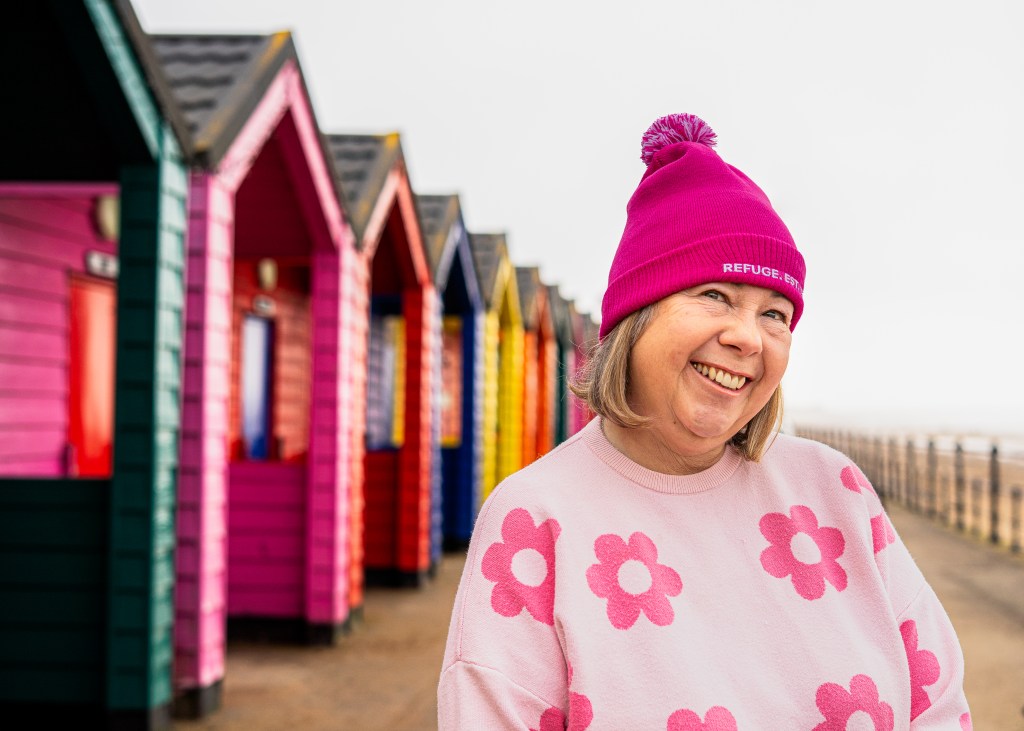
Angela
She/Her
“I was born in 1966, so I grew up in the early 1970s, just as the Women’s Liberation Movement was gaining momentum in the UK. I remember how women were treated as second‑class citizens — paid less than men, limited in their opportunities, and with many wives expected to quietly endure domestic abuse. For women of my mother’s generation, Women’s Lib was a revelation.
If it weren’t for those brave women who stood up and demanded change, we wouldn’t have many of the equalities we now take for granted.
Sixty years on from the formation of the Women’s Lib movement there’s still a long way to go until women get true equality, we must keep the momentum going.
In many ways the UK is going backwards towards the attitudes of previous decades. With the rise of misogyny amongst predominantly young men, fed by the likes of influencer Andrew Tate and social media algorithms.
Women again are fighting for equality and to protect their rights to be safe from male violence.
Unpaid carers are estimated to provide £57bn of care per year. We estimate that the women in the North contribute around £10bn is this, which is £2bn a year more than if they provided the national average.”
- Bambra C, Davies H, Munford L, Taylor-Robinson D, Pickett K et al. (2024) Woman of the North.
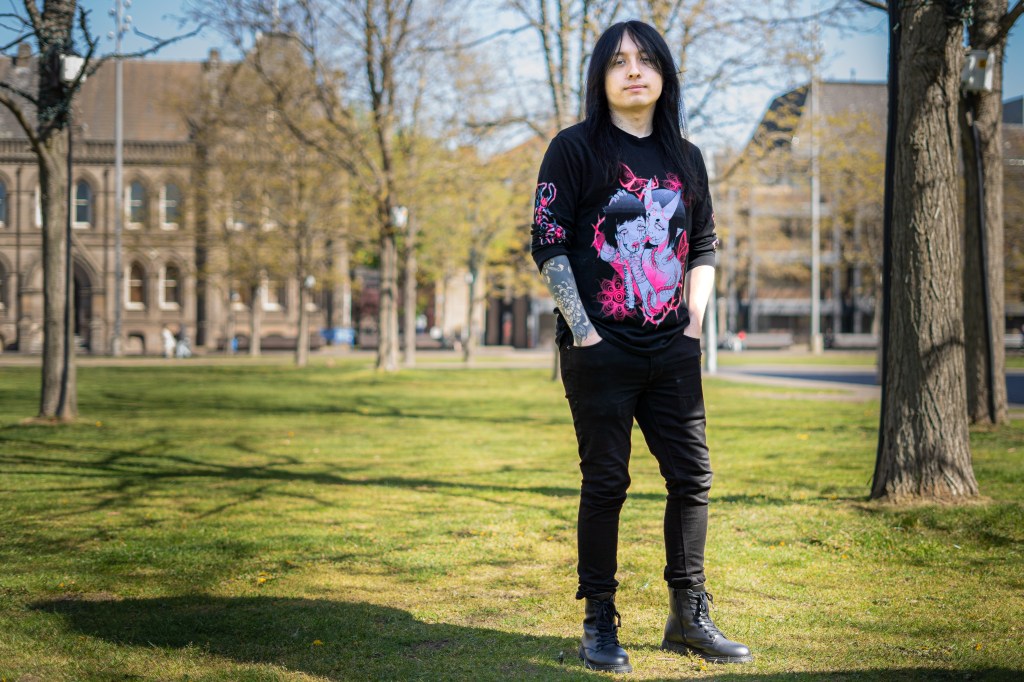
Flare
They/Them
“There are still so many issues that need resolving, we have seen such improvement in so many places not only for women/feminine people but to all people thanks to feminism, it works. There are also so many positives we have in the world such as a higher percentage of female students studying higher education than men.
I think the government is failing everyone. They have consistently failed women since the dawn of time and they punish and demonise young boys in ways that are counter-intuitive or will create a larger divide between them and others, which tends to lead to them finding “support” in places that tell them they are right, and good, and strong such as the “red pill manosphere” and other toxic masculinity spaces. Feminism gave women better role models, people attacked young girls less for various behaviours and guided them to improve, feminism is so important because it is an example for all people and how all should be treated.
The government are directly failing women through their actions and inaction and also indirectly failing women through their treatment of young boys creating generations of toxic and bitter men who live to punish/harm women and others out of insecurity and spite. The government seem to be either so out of touch they are unable to do anything good, or they are purposefully incompetent, or both.
How does the government improve without burning the system down to the ground and starting again? I have no idea
The proportions of trans women from the North East and North West of England who described themselves as disabled with ‘day-to-day activities limited a lot’ was 16.1%, and ‘with activities limited a little’ was 19.1%. These proportions compare to 10% and 9.5% with ‘day-to-day activities limited a lot’ and 12.2% and 11.3% with ‘activities limited a little’ in age-standardised data for women in the North East and North West respectively.”
- Bambra C, Davies H, Munford L, Taylor-Robinson D, Pickett K et al. (2024) Woman of the North.
This project is ongoing, if you would like to participate then please contact me. All photos you receive from this is free and for you to keep.
 Riley Snaps